

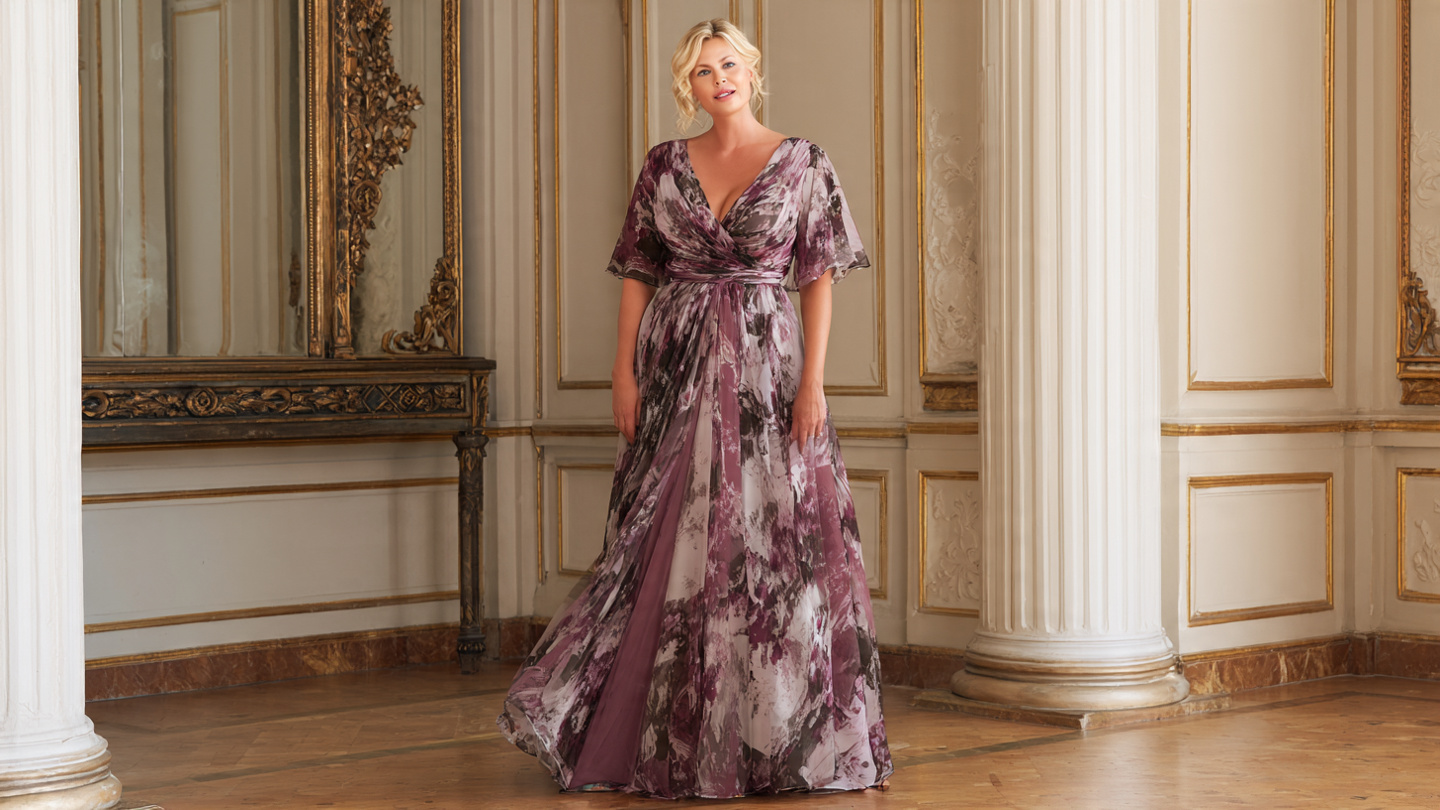
There is a universally understood look of defeat that happens around 9:30 PM at almost every formal wedding or black-tie gala.
You can spot it from across the ballroom. A woman, looking absolutely stunning in a high-end evening gown, is sitting perfectly still at her table. The band is playing an incredible set, the dance floor is packed, and her family is waving for her to join them. But she just smiles, shakes her head, and points vaguely at her dress. She is trapped. The zipper is digging into her ribs, the sleeves won’t allow her to raise her arms past her shoulders, and the skirt is so tight she can only take highly calculated, two-inch steps.
She looks like a million bucks, but she feels completely miserable.
For generations, women have been sold the lie that beauty must equal pain. We have been conditioned to believe that if a dress is truly glamorous, high-fashion, and elegant, it is naturally going to be uncomfortable. We sacrifice our ability to breathe, eat, and dance, all in the name of looking “appropriate” for a few hours.
Let’s put an absolute end to this nonsense.
When you are the Mother of the Bride or Groom, the wedding day is a marathon. You are going to be on your feet for hours. You are going to hug hundreds of people, navigate flights of stairs, sit through a long dinner, and—most importantly—you are going to want to dance with your child on one of the happiest nights of their life. You deserve a gown that lets you celebrate, not one that takes you hostage.
Here at Elegance Fashion Shopping, we believe that true luxury is synonymous with comfort. If you can’t move in it, it isn’t a masterpiece; it is a cage. Here is your ultimate, insider’s guide to the “Comfort Test,” and exactly how to find a show-stopping, couture-level gown that you can actually dance in.
The Illusion of the Fitting Room Pedestal
The biggest mistake women make when shopping for formalwear happens the moment they try the dress on.
You step into the gown, the consultant zips you up, and you step out onto that perfectly lit, carpeted pedestal in front of the three-way mirror. You stand perfectly straight. You hold your breath, suck in your stomach, and stare at your reflection. You think, “Wow, this looks incredible.” You buy it, pack it away, and don’t put it on again until the wedding day.
Here is the problem: You do not spend a wedding day standing perfectly still on a carpeted pedestal.
Clothing behaves entirely differently in motion than it does at a standstill. A dress that looks flawless when you are standing like a mannequin can become a torture device the moment you try to navigate a crowded room. To find a dress you can actually dance in, you have to break the fitting room rules and put the garment through its paces.

Phase 1: The Dressing Room “Comfort Test”
Before you commit to a gown, do not just stand there and admire the beadwork. You must actively test the dress’s engineering. If a consultant looks at you funny, let them. This is your investment, and your comfort is paramount.
1. The Sit Test This is the most critical test of all. While wearing the dress, find a chair in the boutique and sit down for a full two minutes.
- What to look for: Does the boning in the bodice suddenly dig painfully into your ribs or your thighs? Does the neckline choke you when your posture relaxes? Does the fabric across your stomach feel like a vice grip? If you cannot sit comfortably and take a full, deep breath, take the dress off. You will be sitting for speeches, dinner, and transit. It must be comfortable seated.
2. The Hug Test As the matriarch of the family, you are going to give and receive roughly four hundred hugs on the wedding day. Wrap your arms around yourself, or reach out and hug whoever you brought shopping with you.
- What to look for: Do the sleeves pull dangerously tight across your biceps? Does the fabric across your back feel like it is going to rip? If you cannot comfortably wrap your arms around someone, the dress is poorly engineered for your shoulders.
3. The Stair Test Ask the consultant if you can walk up and down a few steps (even if it’s just stepping on and off the pedestal a few times).
- What to look for: Do you have to hike the dress up to your knees just to take a step? Is the skirt so tight around your thighs that you are forced into a rigid, shuffling walk?
4. The “Shimmy” Put your favorite song in your head and give your shoulders and hips a little shake. Raise your arms as if you were cheering or holding a dance partner.
- What to look for: If the dress has off-the-shoulder straps, do they immediately pop up to your ears? If it is a strapless gown, do you instinctively have to grab the bodice and yank it back up? A dress you have to constantly adjust is a dress that will drive you insane by 10:00 PM.

Phase 2: Fabric is Your First Defense
If a dress fails the Comfort Test, the culprit is usually the fabric. The formalwear industry loves rigid materials because they hold their shape easily on a hanger. But your body is not a hanger.
To find a dress you can dance in, you must prioritize fabrics that offer “give” and breathability.
The Miracle of Stretch Lining: This is the ultimate secret of high-end, comfortable evening wear. You can wear a heavy, fully beaded column gown that looks entirely rigid from the outside, but if the interior lining is constructed from a high-quality stretch jersey or a spandex-blend silk, the dress will move flawlessly with your body. Always check the inside of the dress. The lining is what touches your skin; it must be forgiving.
Luxurious, Heavy Crepe: If you want a sleek, modern, architectural look without feeling trapped, high-quality crepe is a dream. It has a beautiful, matte drape and an inherent, subtle stretch that forgives movement while maintaining its sharp, sophisticated structure.
What to Avoid for the Dance Floor: Be incredibly wary of cheap, stiff taffeta or highly structured brocades unless they are flawlessly custom-tailored. These fabrics do not breathe, they do not stretch, and they trap body heat, which can make a crowded dance floor feel like a sauna.
Phase 3: Silhouettes Engineered for Movement
The architecture of your skirt directly dictates your mobility. You can’t dance the salsa in a skirt that binds your knees together.
The Danger of the Extreme Mermaid: A true mermaid gown—one that is skin-tight down to the calves and flares out dramatically at the ankle—is undeniably glamorous for a red carpet photo op. But it is a nightmare for dancing. Your legs are essentially bound together. If you love the hourglass look of a mermaid, opt for a Trumpet silhouette instead. A trumpet flares much higher up, usually at the mid-thigh or just above the knee, giving you the dramatic curves you want while still allowing your legs a full range of motion.
The Freedom of the Flowing A-Line: If your primary goal is to tear up the dance floor, the modern A-line is your best friend. Because the skirt flows away from the body starting at the natural waist, your legs are entirely unrestricted. When executed in a fluid fabric like silk charmeuse or layered georgette, an A-line skirt swirls and moves with you, creating a beautiful, sweeping, cinematic effect when you spin.
The Strategic Magic of a Slit: If you prefer the sleek look of a straight column dress but want the freedom to move, look for a gown with a strategic slit. A slit that hits right at or slightly above the knee releases the tension of the skirt. It allows you to take full, natural strides and dance freely, while still maintaining the sophisticated, straight-up-and-down silhouette when you are standing still.

Phase 4: The Architecture of Support
There is a massive difference between a dress that is “tight” and a dress that is “supportive.”
A dress that is merely tight compresses your body, restricting your breathing and movement. A dress that is supportive utilizes masterful corsetry and boning to hold itself up, relieving the pressure on your body.
If you are wearing a strapless or off-the-shoulder gown, the bodice must be constructed impeccably. It should feature built-in boning that rests comfortably on your waist and hips, acting as a structural foundation. The dress should hold itself up from the waist down, not from the bust up. If you feel like the dress is hanging off your chest, you will spend the entire night pulling it up—and you cannot dance if you are constantly holding your dress together.
The Illusion Solution: If you want the look of a plunging neckline or a strapless gown, but want the absolute, iron-clad security of a dress you can wildly dance in, look for illusion netting. A sheer, skin-toned mesh that connects the bodice to your shoulders or neck ensures the dress is physically anchored to your body. You get the sexy, high-fashion aesthetic, but the dress cannot and will not slip down, no matter how hard you hit the dance floor.
Phase 5: The Tailor’s Magic Touch
You have passed the fitting room test, you have chosen a forgiving fabric, and you have selected a mobile silhouette. The final, non-negotiable step to securing a dance-ready gown is professional tailoring.
A dress straight off the rack is simply not engineered for your specific height or stride.
The Crucial Hemline: The number one reason women end up sitting out the reception is that their dress is too long. If you are constantly stepping on the front of your skirt, you will trip, you will rip the fabric, and you will eventually just give up and sit down.
Bring the exact shoes you will be wearing to your tailor. Have them hem the dress so that the very tip of your shoe is visible when you stand naturally. The hem should hover millimeters above the floor. If you plan on taking your heels off and switching to flats for dancing, you must tell your tailor this. They can engineer the hem or provide a subtle bustle so the dress doesn’t become a tripping hazard the moment the stilettos come off.
Armhole Adjustments: If a gown has sleeves, the armholes (the armscye) are often cut too small or too high in mass-produced formalwear. Have your tailor check the mobility here. If the armhole is too tight, you won’t be able to lift your arms to hug your new son or daughter-in-law, let alone raise the roof during a great song. A tailor can slightly lower or release the armhole, giving you back your mobility.
The Ultimate Goal: Unbothered Joy
We spend months stressing over color palettes, matching shoes to clutches, and agonizing over whether a dress is sufficiently “elegant.” We get so caught up in the visual aesthetic of the day that we forget the physical reality of living in the garment.
Your child’s wedding is a celebration of love, family, and survival. It is a day of profound joy.
Do not allow a poorly constructed piece of clothing to rob you of that joy. You do not have to suffer to look beautiful. You do not have to accept bruised ribs or restricted breathing as the price of high fashion.
Demand comfort. Put your dresses to the test. Seek out the luxurious stretch linings, the fluid silks, and the expertly tailored bodices. Because when you find a gown that makes you look like an absolute powerhouse and feels as comfortable as your favorite loungewear, you achieve the highest possible level of style. You step onto that dance floor not as a rigid statue, but as a vibrant, radiant, unbothered woman who is fully, entirely present for the best night of her life.