


The arrival of a thick, heavy-stock envelope in the mail usually signals one of two things: a milestone gala or a wedding. And the moment you read the words “Black Tie” or “Formal Attire,” a very specific, familiar feeling sets in. It is a mixture of profound excitement and immediate wardrobe panic.
If you are the Mother of the Bride, the Mother of the Groom, or a woman preparing to walk the red carpet of a major charity event, the pressure to find the perfect gown is immense. For years, the formalwear industry seemed to completely misunderstand what mature, confident women actually wanted to wear. We were handed racks of shapeless shifts, stiff taffeta jackets, and uninspired colors. The implicit message was always to cover up and fade into the background.
But a beautiful revolution has quietly taken place in the world of evening wear. Designers have finally realized that elegance does not mean invisibility. The newest collections are a masterclass in sophisticated glamour, offering breathtaking options that celebrate your shape, your personal style, and your undeniable presence in the room.
When you sit down for an evening of Elegance Fashion Shopping, you should be looking for pieces that make your heart race. This season, three distinct elements are defining the absolute best in formal wear. If you are ready to find a dress that makes you feel unstoppable, it is time to take a much closer look at the holy trinity of modern evening wear: Sleeves, Sequins, and Style.
The Renaissance of the Sleeve: From Cover-Up to Couture
Let’s begin with the single most requested feature in formal wear: the sleeve.
For a very long time, sleeves on formal gowns were treated as an afterthought. They were often bulky, made of the same heavy fabric as the skirt, and ended up looking like a conservative suit jacket attached to a dress. If you wanted to cover your arms, you had to sacrifice high fashion.
Today, the sleeve is no longer a compromise; it is the focal point of the design. Designers are using sleeves to add romance, drama, and architectural interest to the gown, ensuring that you feel both comfortably covered and incredibly chic.
The Magic of the Illusion Sleeve
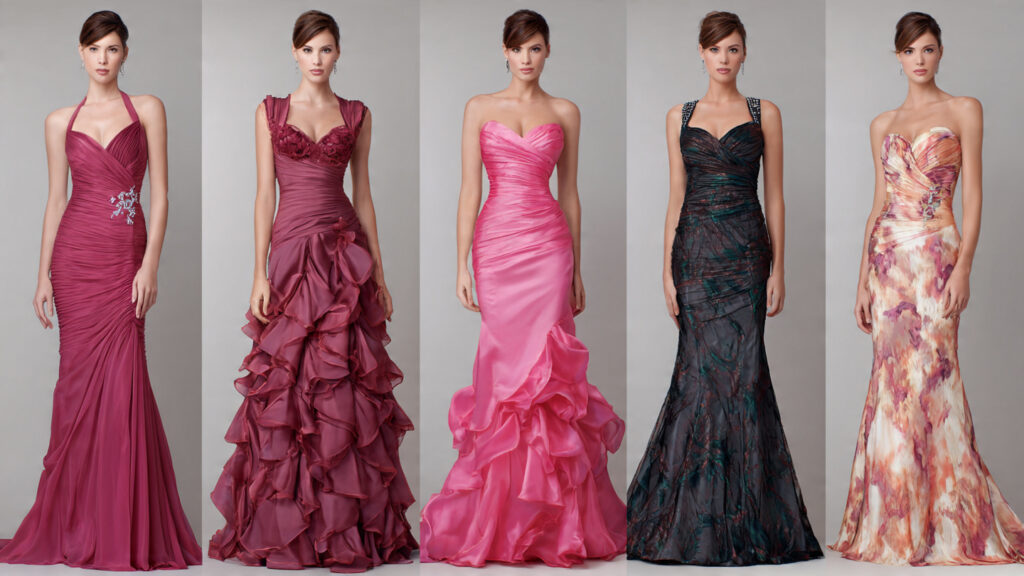
This is, without a doubt, the most brilliant innovation in modern formalwear. An illusion sleeve utilizes a base of sheer, high-quality, skin-toned mesh (often called illusion netting). Onto this sheer canvas, designers meticulously embroider lace appliques, scatter delicate sequins, or weave metallic thread.
The result is pure magic. It gives the visual impression of delicate lace or beading floating directly on your bare skin. You get the complete security and coverage of a full-length sleeve, but with an airy, lightweight visual effect that keeps the gown from looking heavy or matronly. Look at the striking black and navy gowns making waves right now—when dark floral lace creeps down an illusion sleeve to the wrist, it is undeniably sultry, incredibly sophisticated, and perfectly formal.
The Three-Quarter Lace Sleeve
If there is a universally flattering sleeve length, it is the three-quarter cut. Ending just below the elbow, this sleeve length draws the eye directly to the waistline—the narrowest part of the body. It highlights the delicate curve of the forearm and the wrist, which is the perfect place to showcase a beautiful heirloom bracelet. When executed in a rich, textural lace (like a deep burgundy or a striking emerald green), the 3/4 sleeve offers a classic, Audrey Hepburn-esque elegance that never goes out of style.
The Sheer Statement Sleeve
Sometimes, you don’t want the sleeve to be fitted; you want it to move. We are seeing a gorgeous influx of sheer chiffon or tulle sleeves that offer volume and drama. A softly gathered bishop sleeve that billows slightly before cinching at the wrist adds a touch of bohemian royalty to a structured bodice. Similarly, a sheer, cascading flutter sleeve provides the coverage you desire while moving beautifully every time you lift your glass for a toast or step onto the dance floor.
The Strategic Magic of Sequins and Beading
When you hear the word “sequins,” it is easy to instantly picture a 1970s disco ball or a flashy New Year’s Eve mini-dress. But it is time to completely reframe how you think about embellishments. In the realm of high-end formal gowns, sequins, beads, and crystals are not just about adding sparkle; they are tools of architectural engineering.
Liquid Metal and Sculptural Light
The most breathtaking gowns of the season are treating beadwork like liquid metal. Instead of randomly scattered sequins, we are seeing meticulous, geometric, art-deco inspired patterns.
Imagine a statuesque column dress in a champagne or pewter tone, where lines of heavy glass beads sweep down the torso, curving inward at the natural waist before falling straight to the floor. These lines act as optical illusions. They draw the eye vertically, instantly elongating the figure and creating a slimming, statuesque silhouette. The beading catches the ambient light of the room, casting a warm, wealthy glow onto your skin.
The Physics of the Beaded Bodice
There is a highly practical reason why stylists love a heavily beaded gown for mature women: physics.
A bodice that is densely embroidered with glass beads or sequins carries a significant amount of physical weight. While that might sound intimidating, this weight is actually your best friend. The heaviness of the embellishments pulls the fabric taut against your body. It acts as a gentle, glamorous suit of armor, smoothing over the torso, masking any undergarment lines, and ensuring the fabric does not bunch or cling in unflattering ways. It is the ultimate smoothing agent, wrapped in pure glamour.
“Quiet” Sparkle: Tone-on-Tone Embellishment
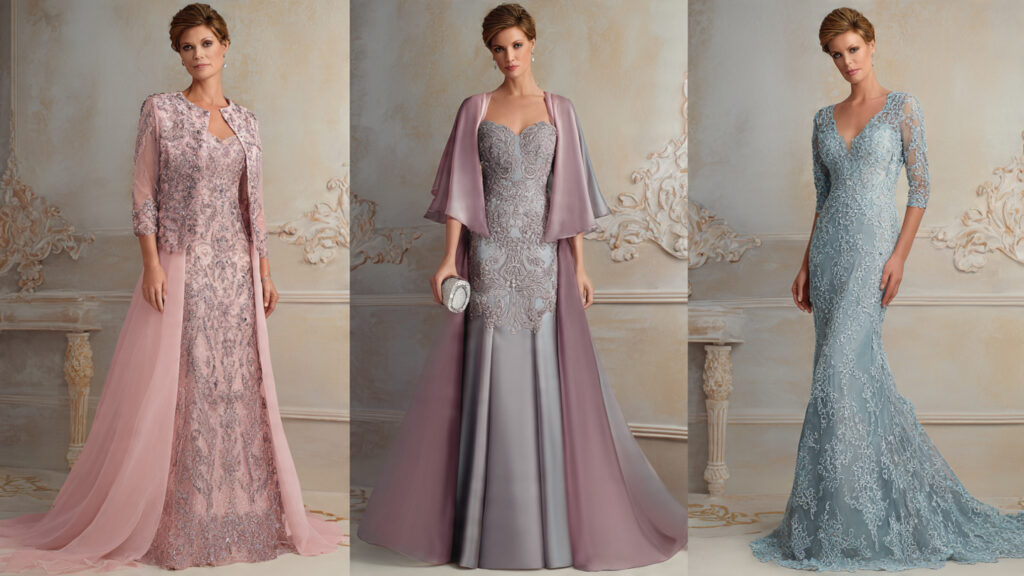
If a fully metallic gold or silver gown feels too loud for your personal style, the trend of tone-on-tone beading is the perfect compromise. This involves using sequins or beads that perfectly match the color of the underlying fabric.
A deep midnight blue gown covered in navy sequins, or a rich burgundy dress featuring ruby-red beading, offers a masterclass in “quiet luxury.” In dim or natural light, the dress simply looks like a beautifully textured, rich fabric. But the moment you step into the flash of a camera or walk under a crystal chandelier, the dress subtly comes alive, shimmering with sophisticated depth. It is a whisper of glamour, rather than a shout.
Style and Silhouette: Engineering Your Perfect Fit
You can have the most exquisite Chantilly lace sleeves and the finest Parisian beadwork, but if the underlying style and silhouette of the gown do not harmonize with your natural body shape, the dress will fall flat.
Finding your perfect style is not about changing your body to fit the dress; it is about finding the dress that was engineered to celebrate your body. The most breathtaking gowns this season rely on three foundational silhouettes.
The Commanding Column
There is a distinct, undeniable power to a woman wearing a perfectly tailored column or sheath dress. This style falls straight from the shoulders or bustline down to the hem, closely following the body’s natural line without flaring out.
- Why it takes our breath away: The column dress creates a continuous, unbroken vertical line. When the eye travels straight up and down, the visual effect is instantly elongating. You look taller, leaner, and incredibly stately.
- How to wear it now: The modern column dress requires heavy fabric—like a dense crepe or head-to-toe beadwork—so it skims the body rather than clinging to it. Pair a metallic column dress with an elegant updo and a simple drop earring for a look that is pure, unfiltered Hollywood royalty.
The Majestic Mermaid and Trumpet
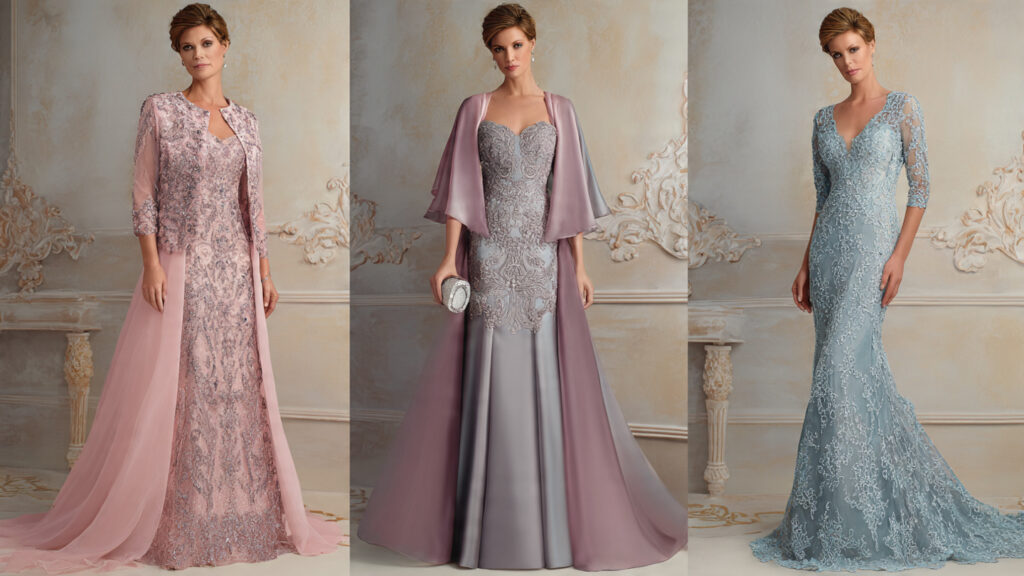
For decades, mature women were subtly conditioned to believe that if they had curves, they needed to hide them under A-line skirts. The modern formalwear landscape throws that advice out the window, embracing the dramatic flair of the trumpet and mermaid silhouettes.
- Why it takes our breath away: These styles are fitted tightly through the bodice, waist, and hips, flaring out dramatically at the mid-thigh or knee. This shape is a celebration. By hugging the hips and balancing that curve with a flared hem, it creates a perfectly symmetrical, high-drama hourglass shape.
- How to wear it now: Look for a trumpet gown executed in a dark, structured lace. The heavy texture of the lace forgives any perceived flaws, while the dramatic cut of the skirt ensures you command attention the moment you walk into the reception hall. It is fierce, feminine, and utterly unforgettable.
The Fluid, Asymmetric Drape
Not every woman wants the heavy armor of beading or the tight restriction of a mermaid skirt. For those who prioritize movement, comfort, and soft romance, the asymmetric draped gown is the ultimate style choice.
- Why it takes our breath away: This style utilizes fluid fabrics—like silk, high-quality chiffon, or liquid satin—that are pulled, gathered, or wrapped across the torso, anchoring at one side of the waist. Asymmetry is visually fascinating and incredibly forgiving. The diagonal lines define a waistline, while the gentle folds of the draped fabric perfectly camouflage the midsection.
- How to wear it now: We are obsessed with this silhouette rendered in soft, watercolor-style floral prints or dusty, ethereal colors like mauve and blush. It looks effortless, as if you simply wrapped a piece of luxurious fabric around yourself and it magically fell into a couture masterpiece.
The Crucial Intersection: Color and Confidence
As you synthesize your choices regarding sleeves, sequins, and the structural style of the gown, the final unifying element is color. The shade you choose dictates the entire mood of the ensemble.
This season, the color palette has moved away from the “polite pastels” of the past and embraced rich, saturated tones that convey authority and elegance.
- The Power Royals (Burgundy, Emerald, Sapphire): These deep jewel tones are universally flattering. They bring a natural, youthful flush to the skin and provide a stunning, high-contrast pop in wedding photographs, ensuring you never fade into the background.
- The Modern Neutrals (Champagne, Bronze, Pewter): A metallic gown acts as a high-glamour neutral. It is incredibly sophisticated, pairs effortlessly with a wide variety of bridal party colors, and catches the evening light to give you a radiant, glowing complexion.
- The Undisputed King (Black): Yes, you can absolutely wear black to a formal wedding or gala. It is the chicest color on the spectrum. When a black gown features the textural elements we’ve discussed—like 3D lace or subtle tonal beading—it transcends “basic” and becomes a striking work of high-fashion art.
The Final Step: Owning the Look
The journey to finding the perfect formal gown can be emotionally taxing. It is easy to stand in front of a three-way mirror and dissect your perceived flaws. But I challenge you to change your perspective.
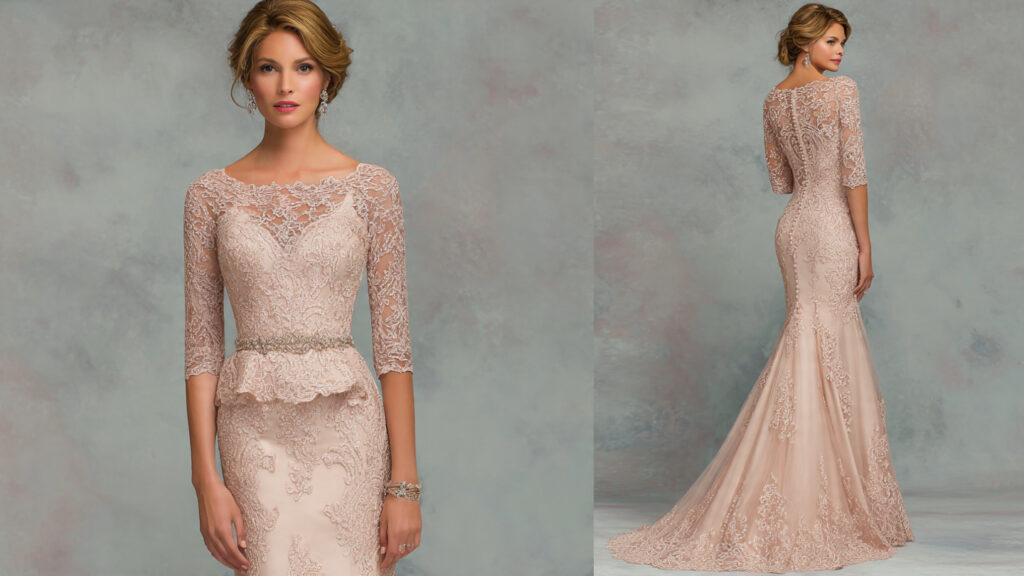
When you slip into a gown that features the elegant romance of an illusion sleeve, the architectural brilliance of heavy beadwork, and a silhouette that honors your natural shape, something incredible happens. Your posture changes. You stand a little taller. Your shoulders drop. You look in the mirror and, instead of seeing a Mother of the Bride trying to fit into a mold, you see a vibrant, powerful, breathtakingly beautiful woman.
That is the true art of style. The dress is merely the canvas; your confidence is the masterpiece.
Do not settle for a dress that makes you want to hide. Demand quality. Demand a perfect fit from a master tailor. Embrace the sequins, play with the dramatic sleeves, and find the silhouette that makes you feel unstoppable. You have earned every single compliment you are about to receive. Step out onto that red carpet, take a deep breath, and get ready to take their breath away.