


Let’s have a completely honest conversation about getting dressed for your child’s wedding.
When you first hear the news of the engagement, there is a rush of pure joy, followed almost immediately by a quiet, slightly panicked thought: “What am I going to wear?” If you are like most women, your body has changed over the years. We carry the physical markers of a life well-lived—maybe our waistlines have shifted, our arms aren’t as toned as they were in our twenties, or our hips have softened. And instead of the fashion industry celebrating these bodies, it often makes formalwear shopping feel like an exercise in frustration. You stand in fitting rooms pulling at zippers, drowning in excess fabric, or feeling exposed in dresses that were clearly designed with a different demographic in mind.
It is incredibly easy to look in the mirror and blame your body. But I am here to tell you, with absolute certainty, that your body is not the problem. The dress is the problem. More specifically, you just haven’t found the right silhouette yet.
The secret to looking and feeling breathtakingly beautiful on your son or daughter’s wedding day isn’t about losing ten pounds or squeezing into a miracle undergarment. It is about understanding the architecture of clothing. When you find a silhouette that harmonizes with your natural shape—one that highlights your favorite features and skims gracefully over the areas you’d rather not emphasize—everything changes. The dress does the work for you.
It’s time to stop hiding behind frumpy jackets and shapeless layers. You deserve to look elegant, radiant, and undeniably stylish. Here is your ultimate guide to flattering your figure and finding the stunning silhouette that will make you feel like the most beautiful mother of the bride (or groom) in the room.
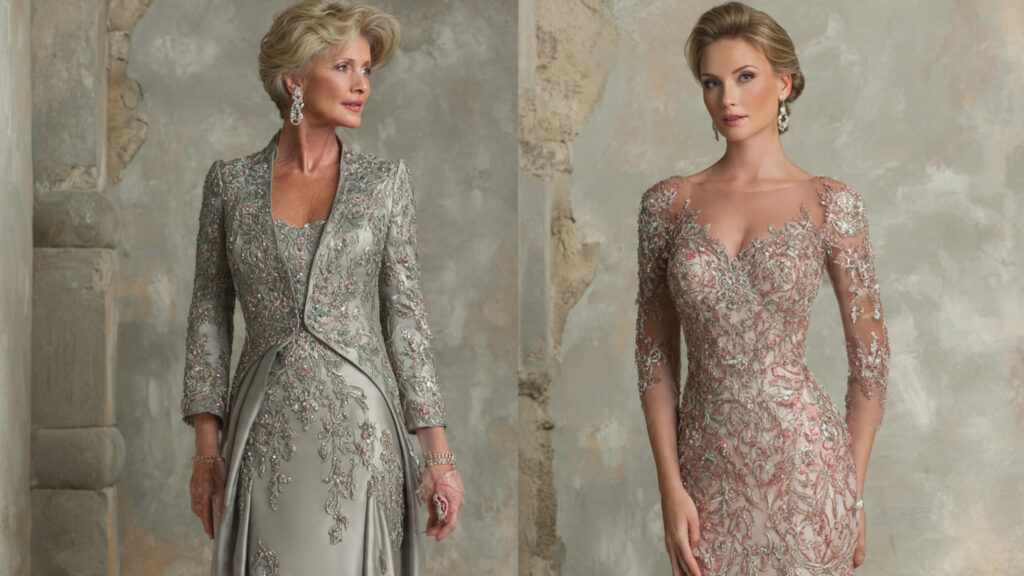
The Golden Rule: Ignore the Size, Focus on the Fit
Before we even discuss shapes, we have to talk about the tag inside the dress. Formalwear sizing is a notorious, frustrating anomaly. A designer evening gown will almost always run one, two, or even three sizes smaller than your everyday street clothes.
If you normally wear a size 12, do not let it ruin your day if you have to zip up a size 16 evening gown. The number on the tag is completely irrelevant. No one at the wedding is going to check your label. They are only going to see how incredibly the dress fits you.
When you shop, your only goal is to find a dress that fits the largest part of your body perfectly. If you have broad shoulders but a narrow waist, buy the dress that fits your shoulders and have the waist taken in. If you carry your weight in your hips, buy the dress that glides over them flawlessly and have the bodice tailored down.
Fit is the foundation of flattery. A perfectly tailored size 18 will always look ten times more slimming and elegant than a size 14 that is pulling, bunching, and pinching.
Silhouette 1: The Magic of the A-Line
If there is a universally flattering superhero in the world of evening wear, it is the A-line silhouette.
What it is: Just like the letter it is named after, an A-line gown is fitted through the bodice and natural waist, and then flows outward to the floor in a gentle, widening triangle.
Why it works: The A-line is pure magic because it focuses all the attention on the narrowest part of your torso—your natural waist (which is usually a few inches above your belly button). By cinching there and then floating away from the body, it completely camouflages the hips, thighs, and lower tummy.
Who it flatters most: * Pear Shapes: If you are smaller on top and wider on the bottom, the A-line balances your proportions perfectly.
- Apple Shapes: If you carry your weight in your midsection, look for an A-line with a slightly higher waist (an empire waist) that flows outward just below the bust.
- Anyone who wants to dance: A-lines offer incredible freedom of movement.
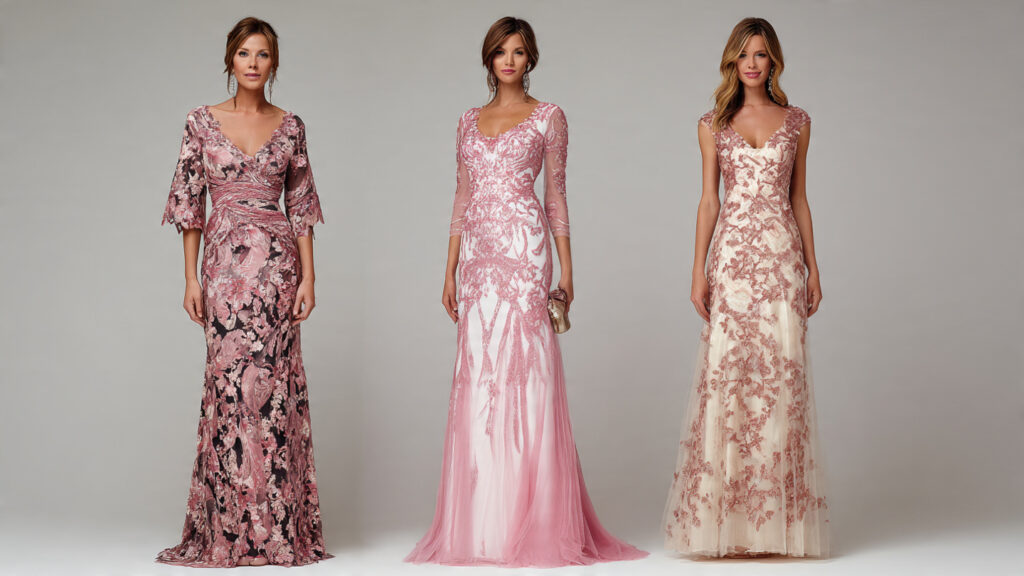
Modern Style Notes: To keep an A-line from looking too “sweet” or outdated, look to the fabrics. The gorgeous dusty pink and soft floral gowns we see trending right now (like those in our third image grouping) use fluid, liquid-like satin or crepe to create an A-line that drapes elegantly rather than puffing out like a ballgown. Pair it with a V-neckline to elongate your torso, and you have a masterpiece of modern elegance.
Silhouette 2: The Confident Column (or Sheath)
There is a distinct, undeniable power to a woman wearing a perfectly fitted column gown. It is the epitome of sophisticated, metropolitan glamour.
What it is: A column or sheath dress falls straight down from the shoulders or bust to the hem, closely following the body’s natural line without flaring out or hugging tight to the legs.
Why it works: Column dresses create an unbroken vertical line. When the eye travels straight up and down without interruption, the visual effect is instantly elongating and slimming. You look taller, leaner, and incredibly stately.
Who it flatters most:
- Petite Women: The continuous line adds the illusion of height.
- Straight or Athletic Figures: If your bust, waist, and hips are roughly the same measurement, a column dress celebrates your sleek frame.
- Hourglass Figures: A sheath dress that is expertly tailored to nip in slightly at the waist will show off your curves elegantly without the drama of a mermaid skirt.
Modern Style Notes: The secret to pulling off a column dress is the fabric. If the fabric is too thin, it will cling to every lump and bump. You need a fabric with weight. This is why heavily beaded column gowns (like the breathtaking gold and black options in our first image) are so universally flattering. The heavy beadwork pulls the fabric taut, creating a smooth, flawless drape over the body. It acts as a glamorous, sparkling armor.
Silhouette 3: The Majestic Mermaid and Trumpet
For a very long time, mature women were told to avoid anything form-fitting. We were conditioned to believe that if we had hips, we needed to hide them. The modern Mother of the Bride throws that advice out the window and embraces the mermaid gown.
What it is: Both mermaid and trumpet silhouettes are fitted tightly through the bodice, waist, and hips. A trumpet flares out mid-thigh, while a true mermaid flares out just above or at the knee.
Why it works: These silhouettes are a celebration of curves. By hugging the hips and flaring at the bottom, they create an incredibly dramatic, balanced hourglass shape. The flare at the bottom visually balances out broad shoulders or a larger bust, creating beautiful symmetry.
Who it flatters most:
- Hourglass Shapes: This was made for you. It highlights your natural proportions perfectly.
- Curvy Figures: Do not fear the fitted hip! Emphasizing the curve of your hip and balancing it with a flared hem is often much more flattering than hiding under layers of tulle.
Modern Style Notes: If you are nervous about a form-fitting dress, look for one that incorporates strategic texture or ruching. The stunning dark burgundy and black gowns featured in our fourth image group are prime examples. The heavy, architectural lace and the strategic patterns of the beadwork draw the eye exactly where the designer wants it to go. A dark, rich color combined with a structured mermaid silhouette is the ultimate recipe for high-impact, figure-flattering glamour.
Silhouette 4: The Strategic Wrap and Asymmetric Drape
Sometimes, the most flattering thing a dress can do is gently trick the eye. That is the genius of draping and wrap silhouettes.
What it is: These dresses feature fabric that is pulled, gathered, or wrapped across the body, often anchoring at one side of the waist.
Why it works: Asymmetry is incredibly flattering. A diagonal line cutting across the torso breaks up the visual width of the body. Furthermore, the gathering of fabric at the waist creates a beautiful focal point that cinches the silhouette while simultaneously providing gentle, forgiving folds of fabric over the stomach area.
Who it flatters most:
- Apple Shapes: The diagonal lines define a waistline that might not naturally be there, while the draping camouflages the tummy.
- Busty Figures: A wrap style naturally creates a V-neckline, which is the most flattering cut for a larger bust, separating and supporting beautifully.
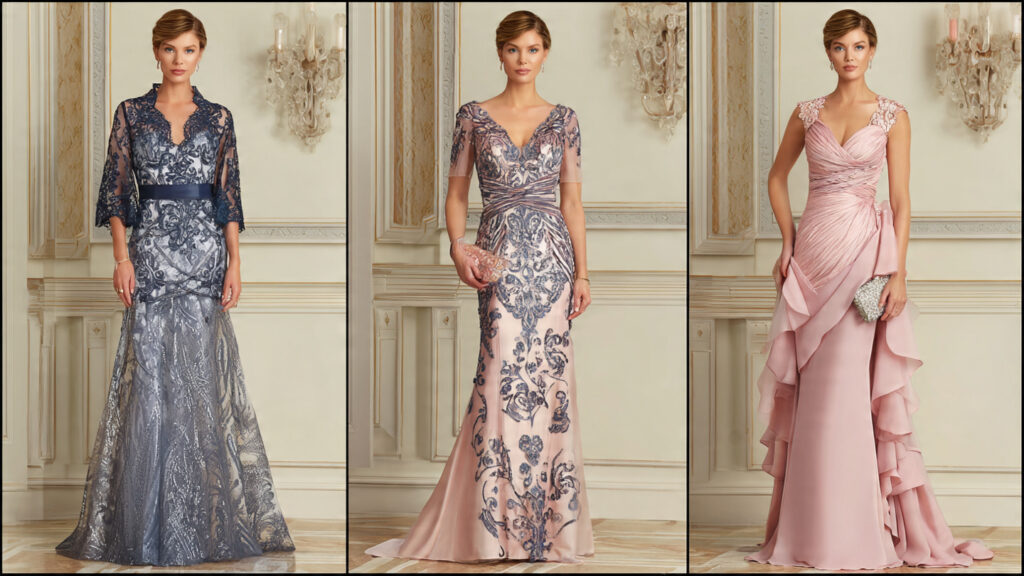
Modern Style Notes: Soft, romantic fabrics are key here. The fluid floral gowns (like the center dress in our second image) show how a subtle wrap and twist at the waist can create a breathtakingly feminine and forgiving shape. It looks effortless, comfortable, and incredibly chic.
The Finishing Touches: Framing the Face
While the skirt and waistline of the dress dictate the silhouette, we cannot talk about flattering your figure without addressing the top half of the gown. When you are standing in a receiving line, posing for close-up photos, or sitting at the head table, the neckline and sleeves are all anyone will see.
The Power of the V-Neck: If you want to look instantly taller and leaner, look for a V-neckline. It elongates the neck, shows off the collarbones, and draws the eye vertically. It is universally flattering, whether it is a subtle dip or a more dramatic plunge (secured with illusion netting for comfort, of course).
The Regal High Neck: For a look of pure, statuesque elegance, a high neckline is magnificent. As seen in several of the striking black and dark red lace gowns in our collections, a high neck paired with a fitted bodice creates incredible posture. It forces you to stand a little taller and frames your face beautifully, making it the perfect choice if you plan to wear your hair in an elegant updo.
Solving the Sleeve Dilemma: If you prefer not to bare your arms, you no longer have to settle for a dowdy, matching bolero jacket.
- Illusion Sleeves: These are the holy grail of elegant coverage. Sheer tulle embroidered with lace or beading gives you the security of a sleeve but the visual lightness of a bare arm. It prevents the dress from looking too “heavy.”
- The 3/4 Sleeve: This length is inherently flattering because it ends exactly at your waistline, drawing the eye right to the narrowest part of your body.
- The Statement Sleeve: A slightly flared bell sleeve or a sheer bishop sleeve adds a touch of dramatic romance and balances out a more fitted skirt beautifully.
Your Final Fitting: A Note on Undergarments
I will leave you with one final, crucial piece of advice for flattering your figure: the dress is only as good as the foundation underneath it.
You can buy the most perfectly tailored A-line or the most expertly draped wrap gown, but if your undergarments are pinching, rolling, or failing to support you, the silhouette will be ruined.
Invest in a high-quality, seamless, smoothing bodysuit or high-waisted shaper. Make sure you are wearing a bra that lifts and separates perfectly. Bring these exact undergarments, along with the shoes you will be wearing, to every single fitting.
When your foundation is smooth and supportive, the fabric of the dress will glide over your body exactly as the designer intended.
Embrace Your Shape
Shopping for your Mother of the Bride or Groom dress should be a beautiful experience. It is a moment to look in the mirror and recognize the strong, vibrant, and elegant woman looking back at you.
Do not dress for the body you had twenty years ago, and do not dress to hide the body you have now. Instead, use these silhouettes to celebrate your figure. Choose the sweeping A-line that lets you glide across the floor. Choose the beaded column that makes you feel like a movie star. Choose the dramatic lace mermaid that makes you feel fierce and powerful.
Flattering your figure isn’t about looking smaller; it is about looking spectacular. So, find the silhouette that makes you stand tall, take a deep breath, and step into the celebration looking absolutely radiant.